
In this article, you will discover:
Procedural Formalities
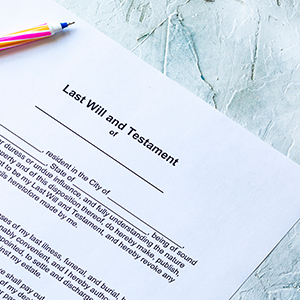
A will must be signed and attested by two witnesses. The biggest challenge for clients is maintaining the original will. While society is becoming increasingly paperless and we are encouraged to do many more tasks digitally, the original signed and attested will is admitted to probate. There is a process to admit a copy, but it is a much more difficult process.
Maintaining the original will in a safe and easily accessible location is paramount. Many people keep their original will at their attorney’s office, but that is the client’s decision.
The Purpose of Your Will
Your will’s purpose is to communicate your wishes regarding your assets after your death:
Designating An Executor
A will must designate an executor. It is recommended to designate an alternate executor in case the primary executor cannot serve. An executor should be someone you trust to manage your estate and distribute your assets after your death. An executor is often a spouse, child, or sibling of the testator.
The Importance And Urgency of Having An Estate Plan
When someone is ready to make a will, they usually have put a lot of thought into their wishes. It’s an estate planning attorney’s job to put those wishes in writing. Clients experience a tremendous level of relief, satisfaction, and comfort after completing their estate plan. The biggest challenge is the temptation to put off making a will for another week, month, or year.
Many people feel that they don’t have enough property to create a will. Everyone, regardless of age, health, or wealth, needs a proper estate plan. Estate planning does not need to be complicated or expensive.

Attorney Seth Bell is a skilled lawyer based in San Antonio, Texas, who has helped clients like you navigate the intricacies of estate planning law. With decades of experience, he is well-equipped to help you create a comprehensive estate plan that clarifies your wishes and intentions now and in the future.
Still have questions? Ready to get started? Contact the Law Office of Seth K. Bell today to schedule an initial consultation.
The age of your beneficiaries at the time the will is made must be considered. For example, the birth of a first child often motivates couples to do their initial estate planning.
At that time, the protection of your child against the unthinkable: an instance where both you and your spouse die unexpectantly when your child is still a minor. While unpleasant to consider, it happens. As a safeguard, you’ll want to set up a contingent trust and designate a guardian of the person and estate for your minor child.
Establishing A Contingent Trust
Suppose you and your spouse die, leaving behind a 5-year-old child. The child is not capable at that age of inheriting your estate. In anticipation of such an event, you can establish a trust contingent on the age of the child at the time of your death. The trust instead of the child directly is the beneficiary of your estate. A trustee is designated in your Will to manage the trust’s assets for the benefit of the child. The designation of an alternate trustee is also recommended especially if the child is very young at the time you create your Will.
The trust’s termination is contingent upon the child’s age. For example, you can establish 35 as the age when the terms of the trust would terminate and your child receives all remaining trust assets free of trust.
Designating A Guardian
There are two types of guardians: a guardian of the person and a guardian of the estate. You can designate the same person or different people as guardians for the person and estate of your child in your will. If necessary, a married couple can be designated as co-guardians.
The guardian of the person is responsible for the day-to-day management of the child’s life. The guardian of the estate manages the child’s finances. When choosing guardians, you may have someone in mind whom you perceive as better with finances, while another is better at care and comfort. The guardian of the person and estate can be the same person or couple.
Another issue to consider: It is preferable that the trustee of the contingent trust is the same person as the guardian of the estate. Guardianship terminates when the child turns 18 while the contingent trust may last until the child is older.
These are examples of estate planning considerations for parents with minor children. If the unthinkable happens, parents are comforted that a plan is in place.
Consider the bigger picture.
In some cases, an estate may appear small because a significant portion of assets may transfer outside of probate—for example, through joint accounts or beneficiary designations. Suppose a husband and wife jointly own an account with right of survivorship. In that case, the account passes to the surviving spouse and is not subject to the probate of the will.
Specific bequests can sometimes complicate family dynamics and lead to family disagreements or legal disputes that as there is a perception of favoritism. For example, a grandparent may want to leave a grandchild a sum of money as a token of their love and affection even if their parents are still living.
Rather than make a specific bequest in your will, consider making a gift during your lifetime. The recipient will likely be more appreciative because you had the opportunity to directly express your love and affection to them when making the gift.
The estate tax threshold for 2026 is $15 million per individual and $30 million for married couples. For 2026, an individual can make a gift(s) up to $19,000.00 with no impact on their estate tax threshold. With such high thresholds, federal estate tax impacts very few Americans. Texas has no state estate tax.
If you are leaving all your estate to your spouse or your children in equal shares, a general bequest of all property is sufficient. If a specific asset is being left to a specific individual, that bequest does need to be specifically detailed in the Will.
If you are married, and have children from a previous marriage or relationship, a Will is essential. If you die without a Will, and some or all your children are not the children of your surviving spouse, your children will inherit your one-half of the community property. That may not be your intention for your property at death.
Texas doesn’t have a forced heirship law. Nobody is required to give anything to anybody. Therefore, you can decide to leave everything to charity and nothing to your children. While your children may contend you were not competent and could contest your will, you are free when you prepare a will to choose where you want your assets to go.
I am a strong advocate for discussing your wishes with your family, so there are no surprises. Often, after all estate planning documents are signed, my office digitizes them and emails them to the client for distribution to their children. This ensures your children understand your wishes. There’s no uncertainty. We’ve all seen the movie where the lawyer calls the family into the office for the reading of the will. That’s such unnecessary drama. Instead, have a candid conversation with your family about your wishes, whether it’s news they want to hear or not. While many people don’t want to create conflict or confrontation, it’s still best to have that conversation with your children.
For more information on what to include in a Texas will, an initial consultation is your next best step. Get the information and legal answers you are seeking by calling (210) 824-4001 today.
Attorney Seth Bell is a skilled lawyer based in San Antonio, Texas, who has helped clients like you navigate the intricacies of estate planning law. With decades of experience, he is well-equipped to help you create a comprehensive estate plan that clarifies your wishes and intentions now and in the future.
Still have questions? Ready to get started? Contact the Law Office of Seth K. Bell today to schedule an initial consultation.